

Last week we were in Bordeaux to taste the 2025 vintage from barrel. After a 2am start in England on the Sunday, we were in the Médoc by mid-morning, tasting at the négociants to gain a first broad impression of the year. From there, the week unfolded in the usual intense but fascinating fashion: visits to many of the top châteaux, hundreds of barrel samples, long discussions with winemakers, and the gradual emergence of a clearer picture of the vintage.
The conclusion is an exciting one. Bordeaux 2025 is a serious, structured year with the potential to rank alongside great vintages like 2005, whilst possessing its own unique character. It is not a vintage of instant charm in the style of some recent “solar” years, but one with impressive tannic architecture, fine fruit, and, in the best wines, a very elegant sense of balance.
After the run of warm, generous vintages such as 2020, 2022 and 2023, with their purity of fruit and often immediate appeal, tasting the 2025s was a reminder that Bordeaux can still deliver wines in a more old-fashioned register, with grip, shape and substance. Some were less open at this early stage, but from long experience we know how often that reserve in youth translates into real ageing potential.
Tannin is central to the character of the vintage. One estate told us that they recorded an IPT (tannin level) of over 100, an extraordinary figure, compared to 70-80 as a more normal figure for a cru classé estate. These tannins give the wines frame and length, and play an important role in their development. Tannins act as natural antioxidants, helping to preserve fruit as the wine evolves in bottle, while allowing more complex savoury, mineral and aromatic elements to emerge over time. This is one reason why young Bordeaux that seems firm or even slightly closed from barrel can later become so rewarding.
Both the Left Bank and Right Bank performed strongly in 2025. The Left Bank produced some magnificent Cabernet-based wines, with classical proportions, freshness and drive. The Right Bank was particularly interesting, not simply for plush Merlot fruit, but for a striking seriousness of structure, contrasting with the more aromatic wines of recent years.
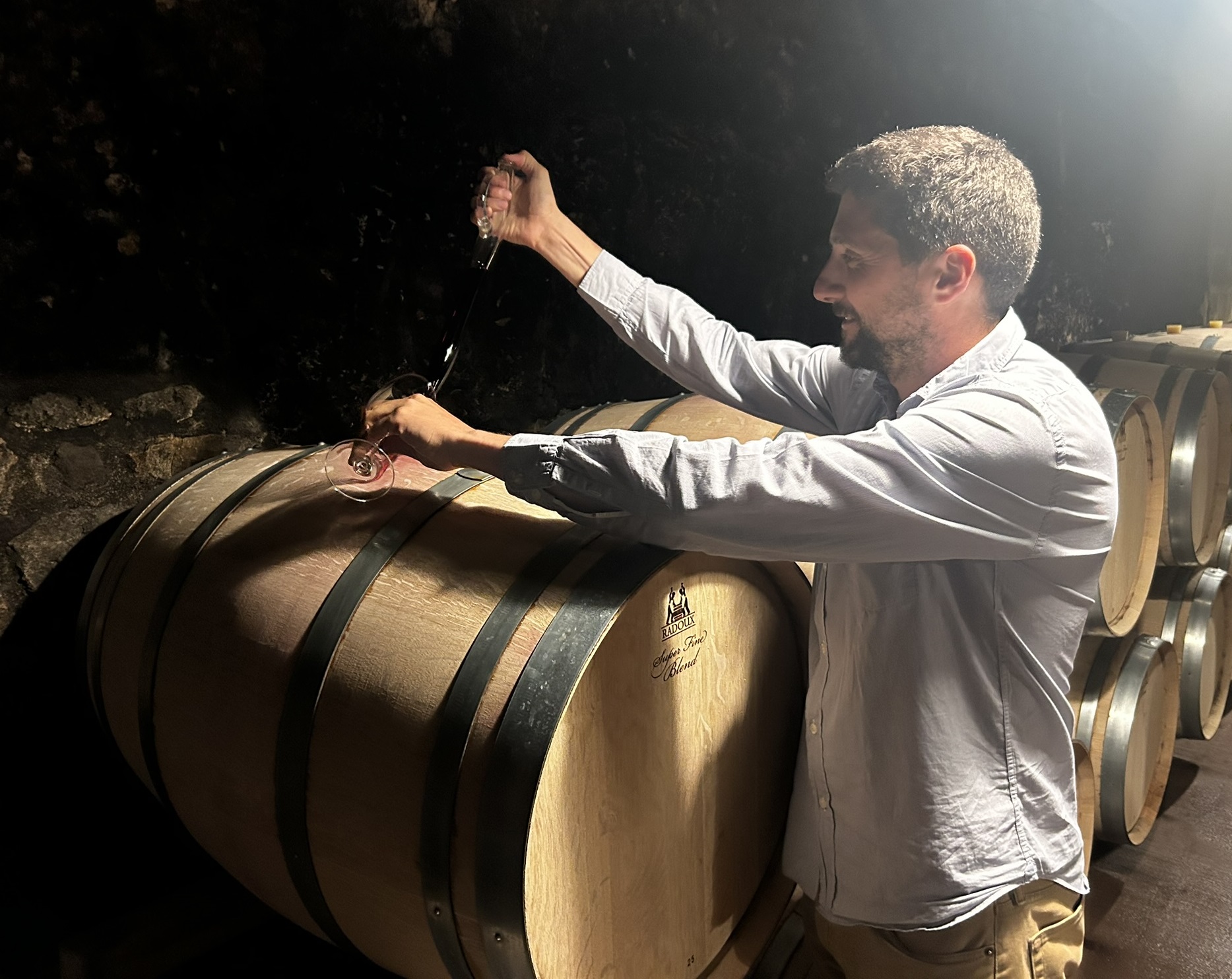
Tasting the 2025 vintage from barrel with Henri Mitjavile at Château Le Tertre Rôteboeuf in St-Emilion
The growing season explains much of this character. Bordeaux experienced a hot, dry summer, with prolonged heat and drought placing pressure on the vines. June was exceptionally warm, and August brought repeated spikes above 35°C in some sectors. Rainfall was limited for much of the summer, and hydric stress became a real issue, particularly on free-draining gravel and sandy soils. By contrast, clay and limestone terroirs often coped especially well, retaining water reserves and helping the vines maintain balance.
Then came the crucial turning point: rain at the end of August and into September. This relieved stress and allowed ripening to continue more steadily. One of the key distinctions we noticed during the week was between estates that picked their Merlot before this rain and those that waited. Picking dates mattered enormously. In some wines, the fruit felt beautifully poised; in others, there was a little more variability. This was reflected in alcohol levels too. Many Left Bank wines were in the 13-13.5% abv range, but the alcohol in those wines with higher abvs was extremely well-integrated and balanced.
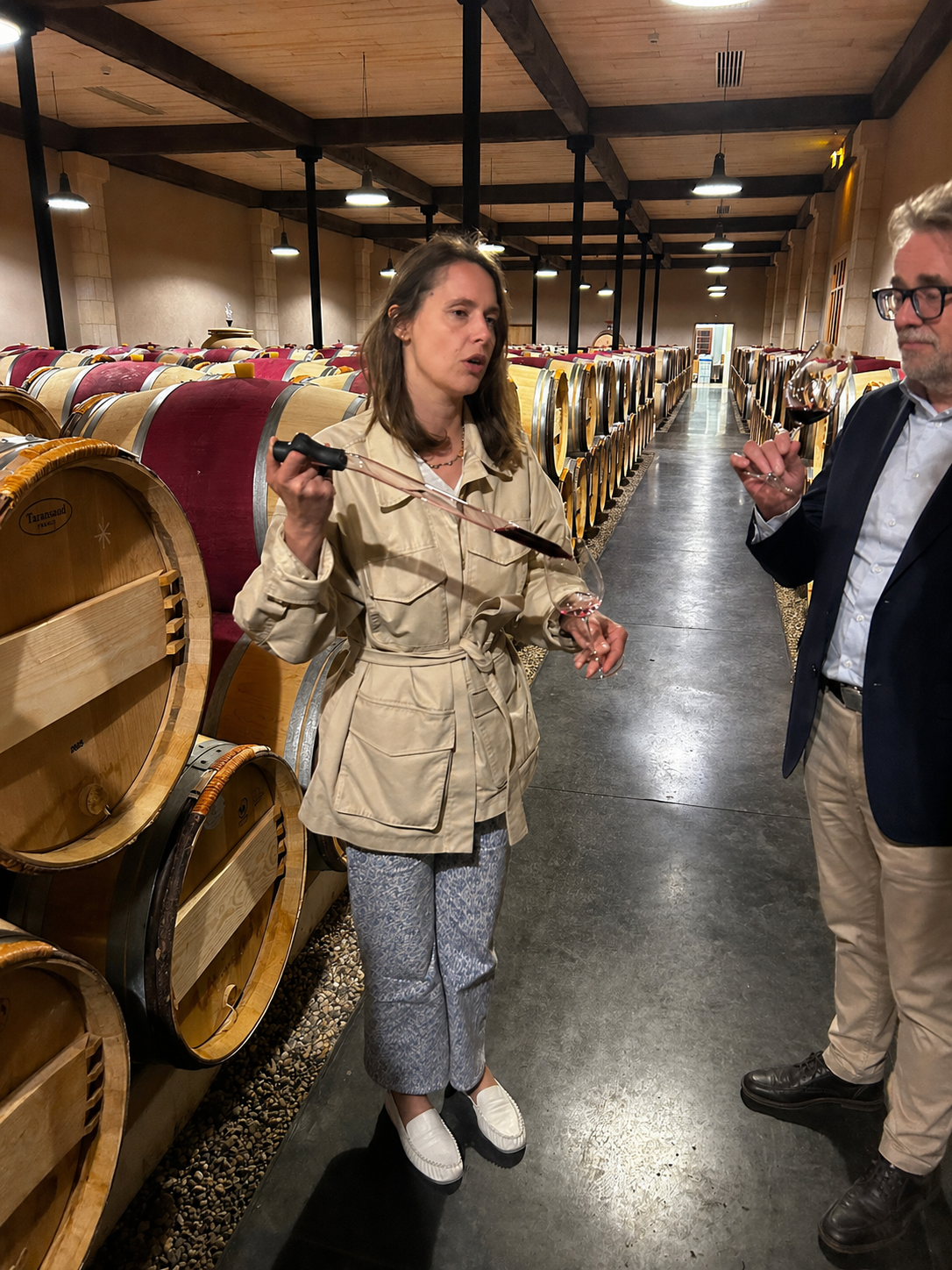
Tasting from a selection of barrels at Chanel-owned Château Rauzan Ségla in Margaux
What is already clear is that the best 2025s combine concentration with freshness, and power with definition. They are not heavy wines. Nor are they merely ripe and polished. There is a tensile quality to many of them: firm tannins, elegant fruit, aromatic lift and a sense of energy beneath the structure. If 2020, 2022 and 2023 often impressed through clarity and approachability, 2025 seems likely to appeal to those who value more old-fashioned claret virtues: architecture, restraint, persistence and the promise of long life.
Perhaps “old-fashioned” is not quite the right word. The precision of viticulture and winemaking today means that these are not austere wines in the old sense. The fruit is clean, the tannins are better managed, and the best estates have avoided excess. The recent solar vintages we mentioned have sometimes been referred as modern classics. For that reason, the term post-modern springs to mind for 2025: classical in structure, but very contemporary in its purity, elegance, and polish.

Château Latour showed their 2025 vintage wines alongside their current releases, Latour 2019 and Les Forts de Latour 2020
Yields are an important part of the story. The crop was much reduced, in many cases around half a normal harvest. This follows another small vintage in 2024 and sits within a wider contraction in Bordeaux production. The region is producing far less wine than it did a generation ago, with fewer growers, fewer hectares under vine, and sharply reduced volumes in many communes. Much of that reduction has affected lower-quality commercial production, but even the great appellations are not immune. The best wines of 2025 may therefore be both sought after and relatively limited.
Among the highlights of our tastings were Montrose, Grand Puy Lacoste, Vieux Château Certan and Lafite; an unbelievably good Léoville Barton, and a block-busting Pontet-Canet. From the more affordable wines, Cantemerle stood out, and there were also encouraging performances among the cru bourgeois, including a sumptuous, crowd-pleasing Beaumont.
Our impression is that 2025 has potential to be considered as one of the greats: Ripe, but not overblown, structured but not hard, concentrated yet fresh. It does not simply repeat the style of the recent great warm vintages. Instead, it offers something different: a return to serious, ageworthy Bordeaux, but with the added precision and purity of modern winemaking.
En primeur releases will begin shortly, and quantities are likely to be limited. Please do contact us with your advance expressions of interest, particularly for the leading châteaux and any wines you would like us to watch closely on your behalf.

YOU MUST BE 18 AND OVER TO PURCHASE AND CONSUME WINE AND ALCOHOL